
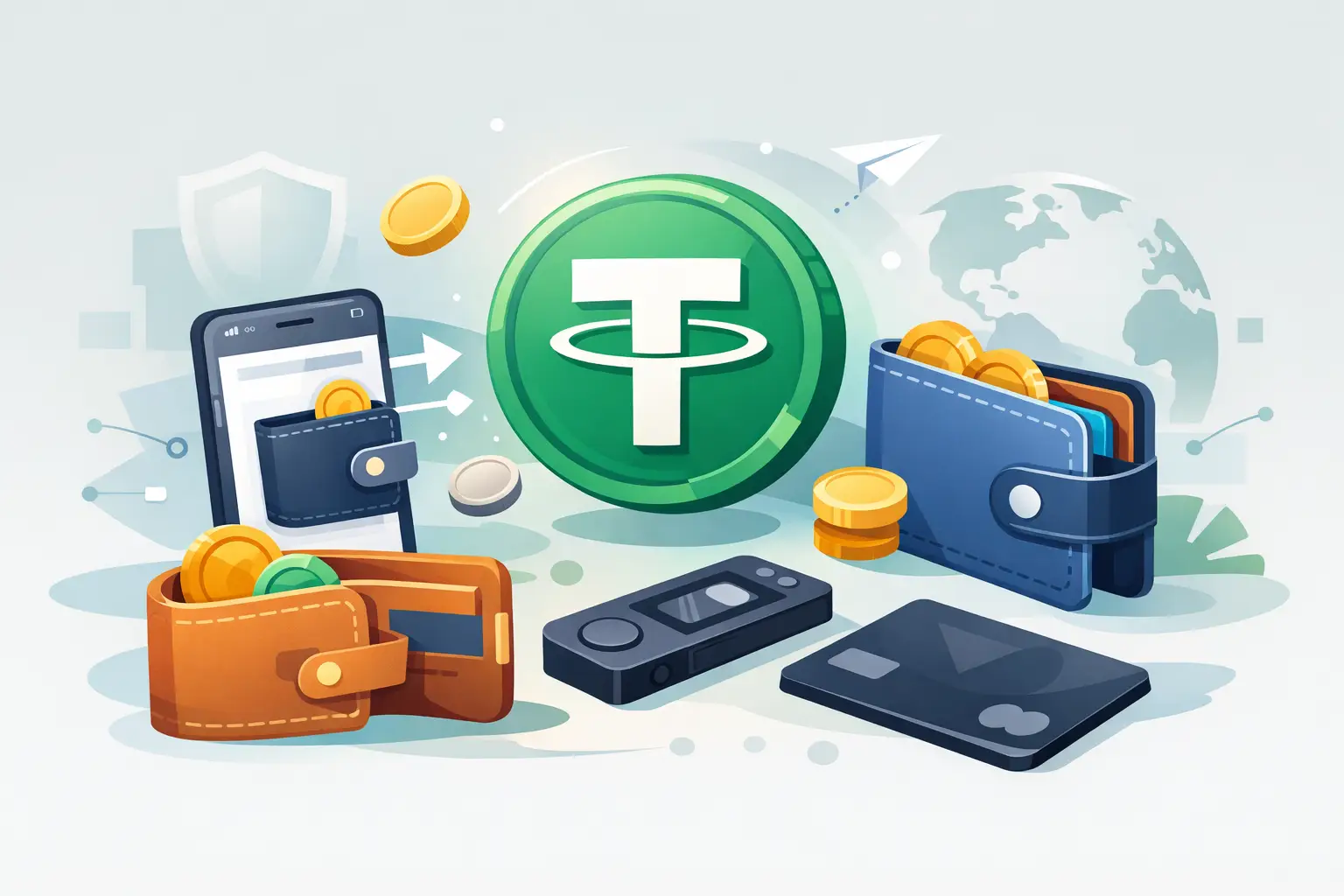
If you want your order processed fast, your wallet choice matters more than most first-time buyers realize. The best wallets for USDT payments are not just about storing stablecoins – they affect network fees, chain compatibility, confirmation speed, and how much friction you hit at checkout.
USDT is simple on the surface. Send stablecoin, payment lands, order moves. But in practice, one wrong network, one clunky app, or one wallet that hides fee controls can slow everything down. If you buy often, buy in volume, or just want clean execution every time, picking the right wallet is part of good operational discipline.
What actually makes a wallet good for USDT?
For USDT payments, the first filter is chain support. USDT exists on multiple networks, and that is where people mess up. A wallet can support USDT, but not the exact version you need to send. The most common chains you will see are TRC20 on Tron and ERC20 on Ethereum. Some wallets support both, some support one better than the other, and some make the distinction too easy to miss.
The second filter is fee control. If you are sending smaller amounts, network costs matter. Tron-based USDT is often favored because fees are typically lower and transfer times are practical. Ethereum can work fine, but gas spikes can make a basic payment feel overpriced. Good wallets make fee visibility clear before you hit send.
The third filter is reliability under pressure. You do not need bells and whistles. You need a wallet that opens fast, shows balances correctly, lets you copy the right address, and broadcasts transactions without weird lag. That sounds basic. It is also where weak wallets fail.
Best wallets for USDT payments right now
Trust Wallet
Trust Wallet is one of the easiest starting points if you want broad chain support without a steep learning curve. It handles multiple assets, supports USDT on major networks, and keeps the send-and-receive process clean. For buyers who want a mobile-first option, it gets the job done.
Its main advantage is accessibility. Setup is quick, the interface is familiar, and it works well for people who are still learning the difference between TRC20 and ERC20. The trade-off is that advanced users may find it a little too simplified, especially if they want tighter control over network settings and transaction management.
Exodus
Exodus is polished, stable, and straightforward. If you care about user experience and want a wallet that feels less raw than some crypto apps, this one stands out. It works well for people who want to manage funds across desktop and mobile without much friction.
For USDT payments, Exodus is solid if supported chains match your needs. The interface is clean, and that reduces mistakes. The trade-off is that it is more convenience-driven than privacy-maximalist, so if your priority is stripped-down operational security over design, you may lean elsewhere.
TronLink
If you mainly use TRC20 USDT, TronLink deserves serious attention. It is purpose-built for the Tron ecosystem, and that focus is exactly why many repeat buyers prefer it. Fewer distractions. Better native fit. Faster understanding of what you are actually sending.
This is not the wallet for someone who wants one app for every chain under the sun. It is a specialist tool. But if low-fee USDT transfers on Tron are your standard move, TronLink is one of the strongest options because it is built for that lane.
MetaMask
MetaMask is widely known, but for USDT payments it only makes sense if you understand what network you are using and how to configure it. Out of the box, many users think of it as an Ethereum wallet first, which can lead to expensive habits if they default to ERC20 transfers without thinking through gas.
That said, MetaMask becomes much more useful once you are comfortable adding networks and managing settings yourself. It is better for experienced users than total beginners. High flexibility. Higher chance of user error if you move too fast.
Ledger
Ledger is the move if security sits at the top of your stack. As a hardware wallet, it keeps private keys offline, which is a different level of protection compared to standard mobile wallets. If you hold larger balances or do not want your spending wallet exposed all the time, it makes sense.
The trade-off is speed and convenience. Hardware wallets are not as fast for quick checkout as hot wallets on your phone. Many experienced users handle this by keeping larger reserves on Ledger and moving smaller spending amounts into a mobile wallet when needed.
Trezor
Trezor plays in a similar lane as Ledger. Strong security posture, offline key storage, and better peace of mind for long-term holding. For USDT payments, it is less about instant convenience and more about controlled access to funds.
If you place frequent small orders, Trezor may feel like overkill as your only wallet. But as part of a two-wallet setup, it works well. Cold storage for reserves, hot wallet for active sends. Clean separation. Fewer mistakes.
Atomic Wallet
Atomic Wallet appeals to users who want an all-in-one feel. It supports a wide range of assets and gives you a decent level of flexibility without feeling too technical. For buyers who value convenience and do not want to juggle multiple apps, that can be attractive.
Still, broad support does not always mean best-in-class execution on every chain. You need to verify that the exact USDT network you plan to use is available and practical. Good generalist. Not always the sharpest specialist.
Coinomi
Coinomi has been around for a while and still gets attention from users who want a multi-asset wallet with a long operating history. It supports many chains and can work well for people who manage a mix of crypto rather than just one payment coin.
Its strength is utility. Its weakness is that the interface can feel less modern than newer options. If your priority is pure ease of use, some competitors look cleaner. If you care more about function than style, Coinomi still belongs in the conversation.
SafePal
SafePal is worth a look if you want flexibility between software and hardware-style security options. It gives users a path to level up from a basic wallet setup without fully rebuilding their process later.
For USDT payments, it can work well, especially for users who plan to become more security-conscious over time. The only caution is complexity. If you are brand new and only need a simple send wallet today, there may be easier first stops.
Which wallet is best for your type of USDT use?
If you are new to crypto and just want the least confusing route, Trust Wallet is hard to argue against. It is simple, widely used, and practical for basic sends. If your main concern is low-fee TRC20 transfers, TronLink is more focused and often a better fit.
If you already know your way around networks and want more customization, MetaMask can be strong. If security matters more than speed because you hold larger balances, Ledger or Trezor make more sense. Most serious users eventually stop looking for one perfect wallet and build a setup around how they actually move funds.
Mistakes that slow down USDT payments
The biggest mistake is sending on the wrong chain. That is the one that creates real pain. Always confirm whether the receiving address expects TRC20, ERC20, or another network before sending anything.
The second mistake is draining your wallet to zero and forgetting network gas. Some wallets require a small amount of the native chain token for fees. On Ethereum, that means ETH. On Tron, that may mean TRX depending on the transfer structure. No gas, no movement.
The third mistake is trying a new wallet for the first time during a live payment. Test first. Learn where the fee settings are, how addresses display, and how transaction history appears. Controlled reps beat rushed guesses.
A smarter setup for repeat buyers
If you send USDT often, the most practical setup is usually one secure storage wallet and one active payment wallet. Keep the bulk of your funds in a hardware wallet or a tightly controlled primary wallet. Move only what you need into a fast mobile wallet for actual checkout.
That gives you speed without keeping your whole balance exposed. It also makes budgeting cleaner. For buyers who value privacy, fast processing, and predictable execution, that split setup is usually stronger than relying on one wallet for everything.
If you are buying through a crypto-first store like Official Chemistry King, where fast payment confirmation and smooth processing matter, wallet discipline is part of the process. Good products and discreet shipping are one side of the equation. Sending correctly, on the right chain, from the right wallet is the other.
Pick the wallet that matches how you actually move – not how you imagine you might. The best tool is the one that keeps your payments fast, your fees under control, and your mistakes close to zero.








Comment (1)
Oleybetcasino, spinning the wheel! Found some fun games here and the bonuses ain’t half bad. Could spend hours here, easy! Try your luck at oleybetcasino, why not?