
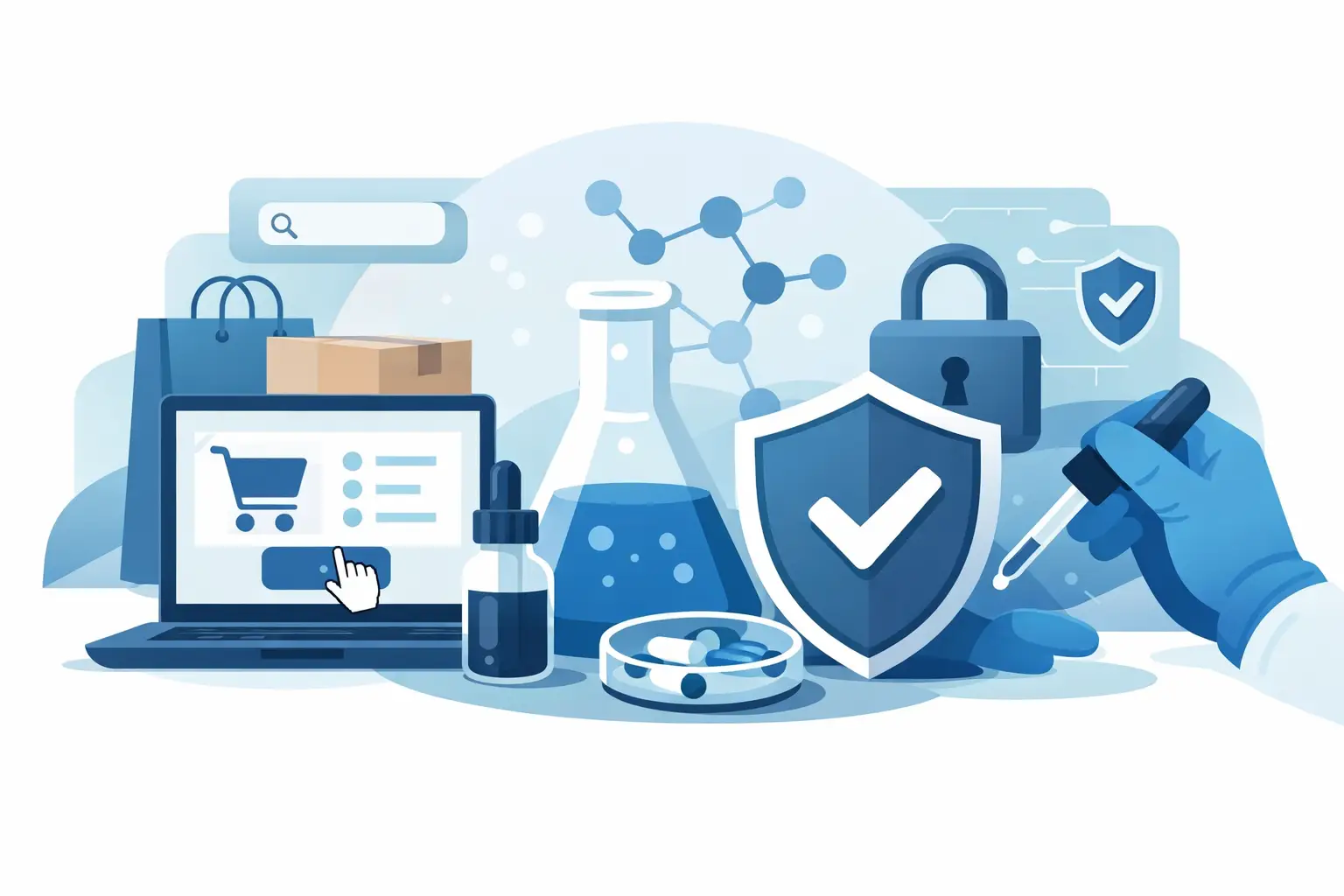
The fastest way to get burned in this market is to shop like you’re buying a phone charger.
Research chemicals are a vendor-trust game. Product names can look familiar. Photos can look clean. Pricing can look aggressive. None of that proves consistency, verification, or competent fulfillment. If you want to know how to buy research chemicals safely, start by thinking like a sharp operator, not an impulse buyer.
A safe purchase is not just about what you order. It is about who handles the stock, how they verify it, how they process payments, how they package shipments, and how they respond when something needs clarification. Safety in this category is operational.
How to buy research chemicals safely starts with vendor selection
The biggest risk is not always the compound itself. Often, it is the vendor behind it. A site can carry popular names and still run sloppy inventory, weak quality control, and inconsistent shipping practices. That is where bad experiences start.
Look for vendors that speak clearly about testing, consistency, and handling. “Lab-tested” should not feel like decoration. It should fit into a broader quality story that includes verification, quality inspection, and repeatable supply. Serious vendors tend to sound controlled, not chaotic. They know what they stock, how it is formatted, and what their processing window looks like.
Shipping discipline matters just as much. Discreet shipping is not a bonus feature in this space. It is part of buying safely. The same goes for processing speed. If a vendor can tell you exactly when paid orders go out, that usually signals a cleaner backend and better order control.
Support is another tell. Real-time support, responsive chat, or fast answers through a community channel can reduce avoidable mistakes. When a vendor disappears the second payment is sent, that is not a small issue. That is a warning.
Product verification matters more than hype
A lot of buyers make the same mistake. They chase the hottest drop, the strongest claim, or the lowest price per unit. That is how quality gets traded for marketing.
Safe buying means reading product pages with discipline. Clear compound naming matters. Format matters too. A blotter, crystal, powder, pellet, or spray each creates different expectations around storage, consistency, and handling. Vendors that present products cleanly and specifically usually run tighter operations than shops that blur details and lean on vague labels.
Pay attention to how claims are framed. “Ultra-pure” sounds good, but without a broader pattern of professional language around verification and inspection, it is just noise. The better signal is consistency across the catalog. If a vendor presents compounds in a standardized, controlled way, that usually reflects stronger internal process.
This is also where experience level matters. If you are newer to the category, do not shop above your understanding just because a product is trending. Buy what you can identify clearly, compare confidently, and store responsibly. Safe purchasing starts before checkout.
Price matters, but cheap can get expensive fast
Everyone likes a deal. Smart buyers still know the difference between a discount and a red flag.
A vendor offering volume pricing, weekly promotions, or bundle deals is normal. A vendor undercutting the entire market with no visible trust signals is something else. In this category, unreal pricing often points to weak sourcing, poor storage, inconsistent batches, or fulfillment problems.
The safer move is to judge price against the full package. Ask what you are actually paying for. Verified stock. Consistent naming. Fast processing. Discreet shipping. Reliable support. Those things have value. If a seller cuts every operational corner, the low sticker price stops looking cheap the moment your order goes sideways.
Bulk buyers should be even more careful here. When quantities go up, risk exposure goes up with them. If you are placing larger orders, the vendor’s consistency matters more than ever. One clean, reliable source beats bouncing between random sellers to save a few dollars per unit.
Payment privacy is part of buying safely
In this market, payment method is not just convenience. It is part of your security posture.
Crypto-only checkout can make sense when it is paired with a simple onboarding path and clear payment instructions. For many buyers, BTC or USDT offers a cleaner privacy-first route than traditional payment rails. That only works if the vendor explains the process well and confirms payment handling clearly.
If you are new to crypto, the safe move is to slow down and learn the flow before placing an order. Wallet setup, address checks, network selection, and transfer confirmation all matter. Most payment errors are not complicated. They happen because someone rushes. Double-check addresses. Confirm the correct coin and network. Keep records of what you sent.
Good vendors reduce friction here. They give direct steps, make checkout predictable, and do not leave first-time buyers guessing. That is one reason a site like Official Chemistry King puts real effort into explaining how crypto purchases work. In this category, fewer payment mistakes means fewer support problems and a smoother path from cart to shipment.
Discreet shipping is not cosmetic
A lot of buyers focus so hard on product and payment that they ignore shipping until there is a problem. That is backwards.
If you care about buying safely, packaging and fulfillment should be part of your decision from the start. Discreet shipping reduces unwanted attention. Fast processing reduces the amount of time your order sits in limbo. Reliable tracking communication reduces confusion and panic.
You are looking for operational competence. Sellers that process promptly and package carefully tend to have stronger order discipline overall. Sellers that are vague about shipping, constantly delayed, or inconsistent with communication usually create avoidable risk.
It also helps to buy with realistic expectations. Same-day processing is strong. It is not magic. Payment timing, cutoff windows, and order volume all affect fulfillment. Safe buyers read the shipping terms before they pay, not after.
Community signals can help, but they are not proof
Telegram channels, restock alerts, drop announcements, and customer chatter can be useful. They show whether a vendor is active, engaged, and actually moving inventory. They can also give you a sense of responsiveness and whether buyers are getting orders handled in real time.
Still, community energy is not the same as verification. A loud channel can create trust theater just as easily as trust. Use community signals as one layer, not your whole decision.
The best use of these channels is practical. Watch how often the vendor updates stock. Notice whether support questions get answered. See if product naming stays consistent across drops. Look for signs of an organized operation rather than just hype. Reliable vendors do not need chaos to prove demand.
New buyers and repeat buyers face different risks
If you are new, your biggest risk is confusion. You may not know which payment route to use, how to read a product listing, or what warning signs to catch before checkout. Your edge is patience. Start with clarity over speed. Learn the system. Confirm every detail.
If you are experienced, your biggest risk is overconfidence. Repeat buyers sometimes skip checks because the category feels familiar. That is when careless mistakes happen – wrong format, wrong quantity, wrong payment network, wrong assumptions about stock.
Safe buying is repetitive on purpose. Confirm the compound. Confirm the format. Confirm the amount. Confirm the payment instructions. Confirm the shipping window. Discipline beats familiarity every time.
The safest buyers think in systems
People talk about safety like it is one decision. It is really a chain.
Choose a vendor with a clean trust profile. Read listings like details matter, because they do. Treat verification language seriously, not emotionally. Use payment methods with intention. Respect shipping as part of the product experience, not an afterthought. If the seller offers clear support and community updates, use them to reduce uncertainty, not to fuel impulse buying.
That is how to buy research chemicals safely in the real world. Not by chasing perfect certainty, because that does not exist in this category. You buy safely by stacking smart decisions until the risk gets smaller and the process gets cleaner.
Move with precision. The right vendor makes that easy. The wrong one makes every step harder.









Comments (2)