You know the feeling: you find the exact compound and format you want, the stock is live, the deal window is short – and then checkout asks you to hand over a full identity package to a payment rail that was never built for discretion.
That friction is why crypto has become the default for a certain kind of buyer. Not because it is trendy. Because it fits the operational reality of privacy-first online purchasing.
If you are asking why use crypto for private online purchases, the answer is simple: it gives you more control over what gets exposed, to whom, and for how long – while making the order flow harder to disrupt.
Why use crypto for private online purchases?
Most “normal” online payments create a paper trail that is both rich and sticky. Card networks, banks, processors, fraud tools, chargeback systems, even budgeting apps – they all love detailed metadata. Merchant names, MCC codes, timestamps, exact amounts, and sometimes even product-level signals get logged, scored, and retained.
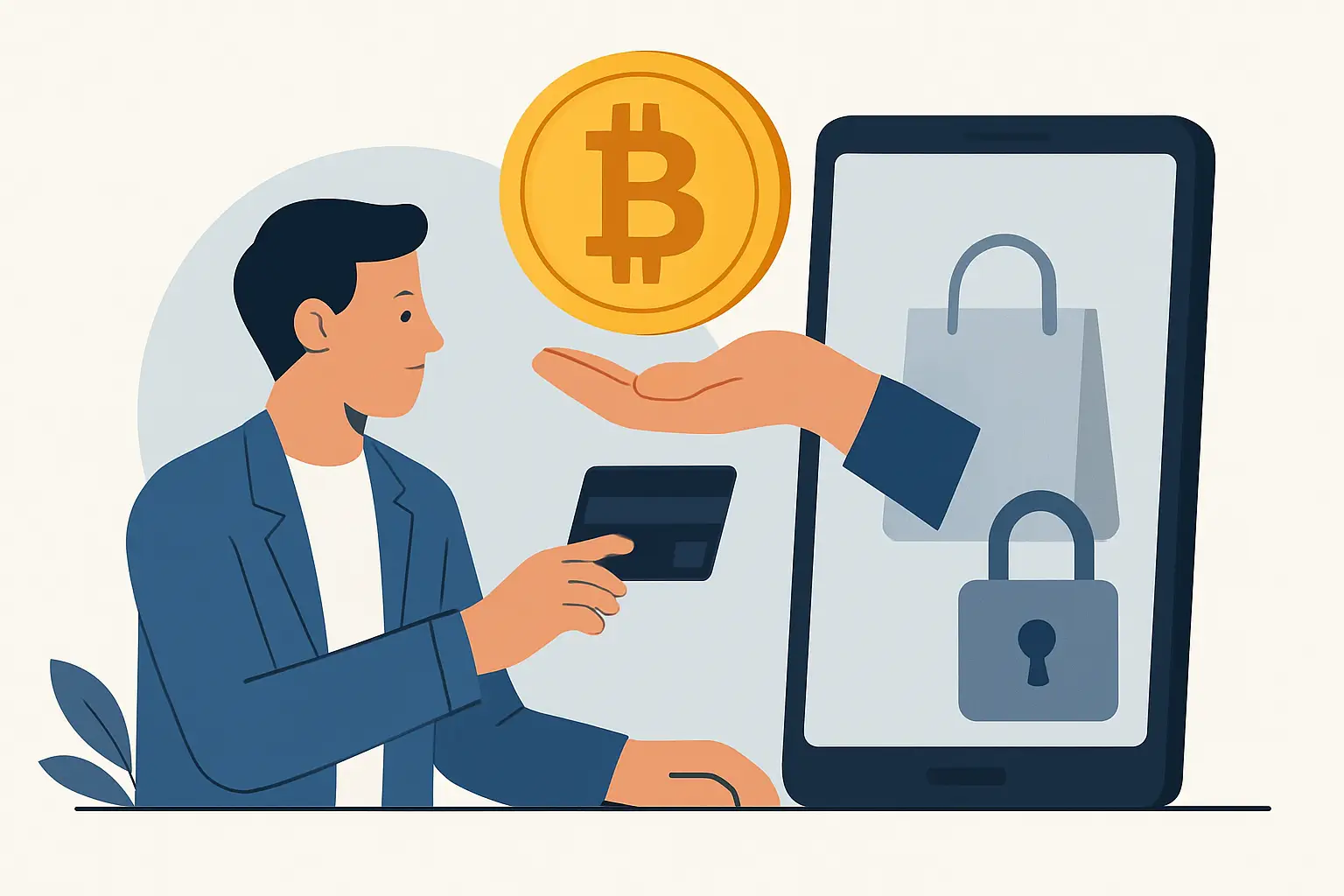
Crypto flips that model. You are not asking a bank to approve your purchase. You are broadcasting a transaction to a network. The merchant gets paid without needing to know your card number, billing address, or your banking relationship. That one change – removing the bank as the gatekeeper – is the core privacy upgrade.
Crypto is not “invisible.” It is not magic. But for privacy-minded buyers, it reduces the most common exposure points: banking records, processor freezes, and human review triggered by “high-risk” categories.
The real privacy gain: fewer entities in the loop
When you pay by card, you are effectively inviting a committee to your checkout. The issuing bank, the processor, the card network, the risk engine, and sometimes third-party fraud vendors are all involved. Each one can log, flag, or interrupt the transaction.
With crypto, the transaction is between your wallet and the merchant’s wallet. You still have an exchange or on-ramp if you are buying crypto with fiat, and that step can involve identity checks. But the actual purchase is not passing through the traditional payments stack that loves to over-collect and over-retain.
For private online purchases, this matters because the biggest privacy leaks are usually boring: a bank statement line item, a processor descriptor, a “we detected unusual activity” email, or a customer service call that gets recorded.
Operational security, not paranoia
Privacy is not only about hiding. It is about reducing unnecessary risk.
A lot of buyers are not trying to disappear from the internet. They just do not want purchases tied to their main checking account, their family card, a shared household statement, or an employer-linked bank. They want compartmentalization.
Crypto supports that mindset. You can keep your purchase budget separate. You can use a dedicated wallet. You can fund it as needed. That separation is practical, not theatrical.
Faster approvals and fewer “payment drama” moments
Cards fail for reasons that have nothing to do with you: region blocks, merchant category restrictions, bank risk rules, processor outages, and automated fraud models that are allergic to anything outside “normal consumer retail.” Even if the purchase is legal where you are, the payment rails can still refuse it.
Crypto payments, by design, do not ask permission from a bank. If you have the funds and you send the correct amount to the correct address, it settles.
That reliability matters when inventory moves fast. If you shop in drop culture, you already know the difference between “I meant to order” and “I placed the order.” Crypto turns that gap into a straight line.
Chargebacks are great for consumers – until they are not
Chargebacks protect cardholders. They also create a predictable mess for merchants: disputes, frozen funds, longer settlement times, and compliance pressure. In categories that processors label “high-risk,” those chargeback dynamics can cause payment providers to clamp down hard.
Crypto transactions are typically irreversible once confirmed. That sounds scary if you are used to card protections, and it should make you more careful. But it also means fewer payment reversals, fewer account holds, and fewer forced shutdowns due to dispute ratios.
For the buyer, the upside is continuity. You want the vendor to keep operating, keep processing, and keep shipping. Payments that cannot be yanked back after delivery reduce the incentive for heavy-handed processor interventions.
The trade-off is on you: you must verify details before you send.
What crypto does not do (and what people get wrong)
If you are using crypto for private online purchases, you need clean expectations.
First, most major exchanges are not anonymous. If you buy BTC or USDT on a regulated platform, your identity is tied to that account. That does not mean the merchant sees your identity, but it does mean the on-ramp knows.
Second, blockchains are transparent. Wallet addresses and transfers can be traced. Privacy is about reducing linkage, not pretending the ledger is hidden.
Third, crypto does not fix sloppy behavior. If you ship to a name and address that you do not want associated with the purchase, the payment method is not the weak link – your shipping details are.
So yes, crypto can improve privacy. But you still need basic operational discipline.
The cleanest way to use crypto for privacy
Think in layers. Your goal is to minimize unnecessary exposure while keeping the buying process simple enough that you do not make mistakes.
Start with a dedicated wallet that you only use for online purchases you want compartmentalized. Fund it as needed rather than keeping a huge balance sitting there. If you are a repeat buyer, this is the difference between controlled routine and chaotic improvisation.
If you are paying with BTC, remember network fees and confirmation times can vary. If you are paying with USDT, know which network the merchant accepts (sending on the wrong chain is a classic self-own). The best privacy setup in the world is useless if you mis-send funds.
Also, keep your transaction hygiene tight: copy addresses carefully, do not rely on screenshots, and treat “change of address” messages as hostile until verified through official support channels.
Why USDT is popular for checkout
A lot of privacy-focused buyers prefer USDT for one reason: predictability. Prices stay stable compared to BTC. That means you are not doing mental math while the market moves 3% in an hour.
BTC still wins on universal recognition and long-term familiarity. But for quick online purchases, stablecoins reduce surprises. If you care about speed and exact totals, stability is a feature.
The only catch is network selection and fees. USDT exists on multiple chains, and the wrong route can create delays or loss. If you want clean checkout, match the network exactly.
Privacy is also about shipping and support
Payment is one piece. Private online purchasing is a system.
Discreet shipping policies matter because they reduce exposure at the doorstep, not just on a statement. Same-day processing matters because it reduces the time your order sits in limbo. Real-time support matters because it reduces the chance you panic, resend funds, or create duplicate orders.
This is where crypto-only models often feel more professional than people expect. When a seller builds around BTC/USDT from day one, the workflow is designed for it: clear payment windows, clear confirmations, and fewer moving parts.
If you are buying research chemicals and you want a crypto-first flow that prioritizes fast processing and discreet fulfillment, Official Chemistry King is built around that reality.
The trade-offs you should be honest about
Crypto improves privacy in specific ways. It also adds responsibility.
You lose the safety net of “call the bank.” If you mistype an address or send the wrong asset, you may not be able to reverse it. If you get tricked by a fake support account, crypto will not save you.
You also have to deal with basic competency steps: securing your wallet, protecting seed phrases, and avoiding sketchy downloads. If you cannot commit to that, your risk might go up even if your privacy improves.
And finally, your privacy still depends on your decisions. If you buy crypto on an exchange tied to your identity and immediately send it in a way that is easily linkable, the privacy gain is smaller. If you separate roles – on-ramp, wallet, purchase – the gain is bigger.
When crypto is the right call
Crypto is the right tool when you value control, discretion, and reliability more than you value chargeback protections. It is especially useful when traditional processors overreach, delay, or deny purchases based on category risk instead of actual fraud.
If your priority is private online purchases with fewer third parties involved, crypto is hard to beat. Not perfect. Not anonymous by default. Just cleaner, leaner, and more aligned with how privacy-first buyers actually operate.
The helpful move is to treat crypto like lab work: measure twice, send once, document what matters, and keep your process consistent. That is how you get the upside without donating funds to mistakes.