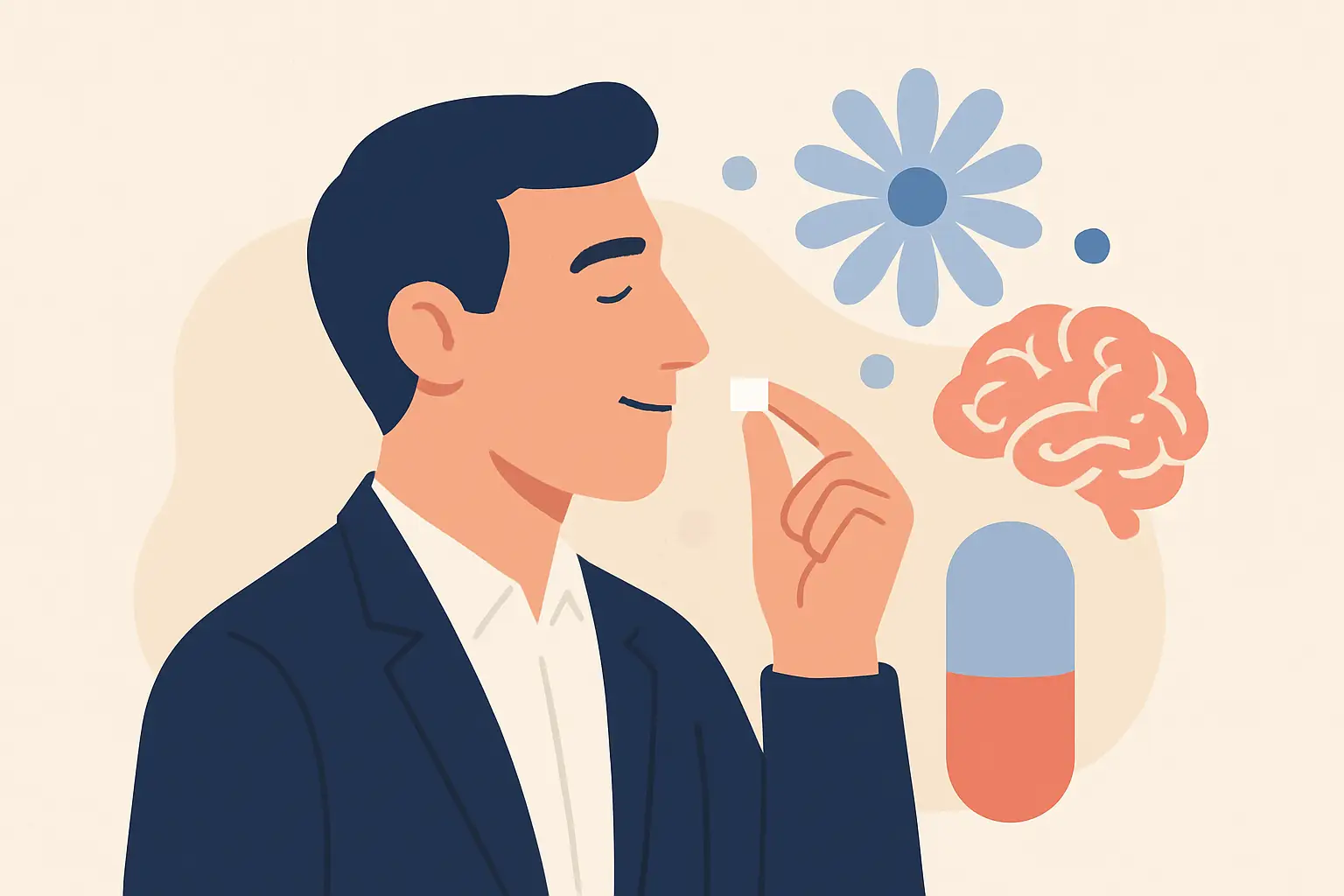
You take a dose that is supposed to be “sub-perceptual” and then you spend the next few hours doing the most LSD thing possible: scanning your brain for evidence it worked.
That’s the real starting point for understanding what does microdosing lsd feel like. Most of the experience is subtle, context-dependent, and easier to describe by what changes in your day than by any obvious psychedelic fireworks.
Microdosing is not tripping. If you’re seeing trails, melting patterns, or getting emotionally steamrolled, you’re not in microdose territory. The target is a light nudge – something you can run in the background while you work, train, create, or just handle life with a little more bandwidth.
What does microdosing LSD feel like day to day?
On a “clean” microdose day, the first thing many people notice is a shift in energy. Not manic, not cracked-out – more like your engine starts easier. You may feel slightly more awake, with less friction between “I should do this” and actually doing it.
Focus can feel smoother, especially for tasks that benefit from curiosity: writing, design, problem-solving, planning, tedious admin you’ve been avoiding. It’s not a laser beam for everyone. For some, it’s a wider spotlight – you can connect ideas faster, but you might also hop between tabs more if your dose is too high or your environment is chaotic.
Mood changes are common but not always dramatic. A lot of users describe a mild lift – less heaviness, more patience, a little more humor in the room. Socially, it can feel like your “response time” improves. Words come easier. Eye contact feels less effortful. You’re still you, just less buffered by static.
Physically, people often report a light stimulation: slightly higher body temperature, a subtle buzz in the chest, or that “I could go for a walk” urge. Appetite might be lower. Sleep later that night can be fine, or it can be touchy if you dosed late or ran too stimulating of a day.
The timeline: how it usually comes on and fades
LSD and its analogs tend to have a long runway. A microdose can take 30 to 90 minutes to show itself, and it often peaks in a quiet way. You might not feel a “hit” so much as you notice you’ve been moving for two hours without procrastinating.
The mid-day window is where most people judge it. If it’s working, you feel capable, motivated, and more engaged. If it’s too much, you’ll feel it here too: restlessness, tight jaw, slightly anxious edge, difficulty settling into one task.
The tail end can linger. Even when the obvious effects fade, you may still feel more alert than usual. That’s why timing matters. Morning dosing tends to behave better with normal schedules. Late afternoon dosing is where people start paying for it at bedtime.
Microdose effects you might not expect
A lot of the “feel” of microdosing isn’t euphoria. It’s perception and sensitivity shifting just a few clicks.
You might notice your senses sharpen: music sounds more layered, color looks a bit brighter, food tastes more distinct. It’s not the neon carnival of a full dose. It’s more like adjusting the contrast.
Emotionally, some people feel more open. That can be great for therapy, journaling, or having real conversations. But it can also mean you’re less able to ignore what you’ve been avoiding. Microdosing won’t magically delete stress. In some cases, it makes the stress harder to numb out.
Creativity can show up as fluency rather than genius. You don’t suddenly become a different person. You just generate more options, connect ideas faster, and feel less self-censoring.
When it feels bad: the common “too much” signals
A true microdose should not feel like you’re holding on to a rocket. If you’re uncomfortable, the dose is likely too high or the day is set up wrong.
The most common negative feel is stimulation without direction. Your body is ready to move, but your mind can’t land. That can turn into irritability, especially in noisy environments or around people who drain you.
Some people get a mild anxious edge. That doesn’t always mean microdosing is “bad” for you, but it does mean your margin is thin. Caffeine on top can push it over the line. So can poor sleep, dehydration, or trying to power through a high-stress day.
Body load is usually light at microdose levels, but it can happen: tension in the neck and shoulders, jaw clenching, a fluttery stomach. If you’re sensitive, magnesium, hydration, and a calmer setting can help, but the cleanest fix is dose reduction.
What changes the experience the most (and why it depends)
The same microdose can feel clean one week and weird the next. That’s not mystical – it’s variables.
Sleep is the big one. Microdosing on five hours of sleep can feel edgy and scattered. On a well-rested day, it’s more likely to feel like smooth drive.
Your baseline mood matters. If you’re already anxious, a stimulating microdose can amplify that. If you’re flat and unmotivated, it can feel like a reset.
Food and hydration matter more than people expect. A lot of “this feels off” is actually low blood sugar and dehydration, especially if the dose subtly suppresses appetite.
Environment also decides the vibe. Microdosing in a controlled routine (work block, gym, creative session) tends to feel productive. Microdosing in chaos (travel, conflict, loud social scenes) can feel like your nervous system is exposed.
And then there’s dose accuracy. Microdosing lives and dies on consistency. If the actual amount swings, the subjective feel swings with it.
Microdosing LSD vs a full dose: the clean separation
A full psychedelic dose tends to change the whole operating system. A microdose is supposed to change the interface.
With a microdose, you should be able to drive normal responsibilities: meetings, errands, workouts, family time. You might feel more engaged, but you should not feel impaired.
With a full dose, you’re in altered-state territory with big perceptual shifts, emotional waves, and a very different risk profile. If you’re aiming for microdosing and you’re getting mini-trip effects, that’s your sign to back down.
Microdosing and performance: what it actually supports
People chase microdosing because they want output: better focus, better mood, better training sessions, better creativity.
On the best days, it feels like momentum. You start tasks faster, you tolerate boredom better, and you’re less likely to get stuck in perfectionism. That’s the “performance” value – not a superpower, but less resistance.
For physical training, some people report improved mind-muscle connection and more enjoyment during cardio or long sessions. Others feel a little too stimulated, like their heart rate climbs faster or their breathing feels more noticeable. If you already train with high intensity, a microdose can feel like extra gas – or extra jitter.
Socially, it can feel like you’re more present. That can make networking, dating, or group settings easier. But if your dose creeps up, it can also make you talk too much, interrupt, or feel overstimulated by crowds.
Safety, legality, and the part people skip
LSD is illegal in the US, and laws around analogs can be complicated. Beyond legality, there’s the real-world issue: potency and identity matter. Microdosing is a measurement game, and guessing is how people end up accidentally too high.
Drug interactions are another blind spot. SSRIs and other psychiatric meds can change how psychedelics feel, sometimes blunting effects, sometimes creating unpredictable outcomes. If you have a history of mania, psychosis, or severe anxiety, psychedelics can be higher risk – even at low doses.
Also, microdosing is not a substitute for sleep, mental health care, or lifestyle basics. If you treat it like a productivity hack while ignoring everything else, the “feel” often degrades into tension and frustration.
Getting a cleaner read on your own response
If you’re trying to understand what microdosing lsd feels like for you, the smartest move is to reduce noise.
Pick a normal day, not a crisis day. Keep caffeine modest. Eat something simple. Hydrate. Set one or two tasks you can actually measure, like writing for 60 minutes or clearing a backlog. Then check your results, not just your sensations.
It also helps to respect spacing. Daily dosing can blur the signal and increase tolerance. Many people use an every-third-day rhythm or a few days per week approach specifically to keep the effects readable.
If you’re buying compounds marketed for microdosing, consistency is the whole point. Products that are lab-tested and reliably dosed help because you can adjust in small increments instead of playing roulette. If you care about that level of control, Official Chemistry King is built around consistent, verified batches and discreet, fast processing at https://officialchemistryking.com.
The honest answer
Microdosing, when it’s dialed, usually feels like a small advantage you can actually use: steadier energy, lighter mood, and a little more mental flexibility. When it’s not dialed, it feels like nervous system static – restless, edgy, and distractible.
Treat it like precision work, not a vibe. The more you control your day, your dose accuracy, and your expectations, the more likely the experience feels clean, useful, and repeatable. And if the day feels off, it’s fine to skip it – confidence is also knowing when not to push the button.