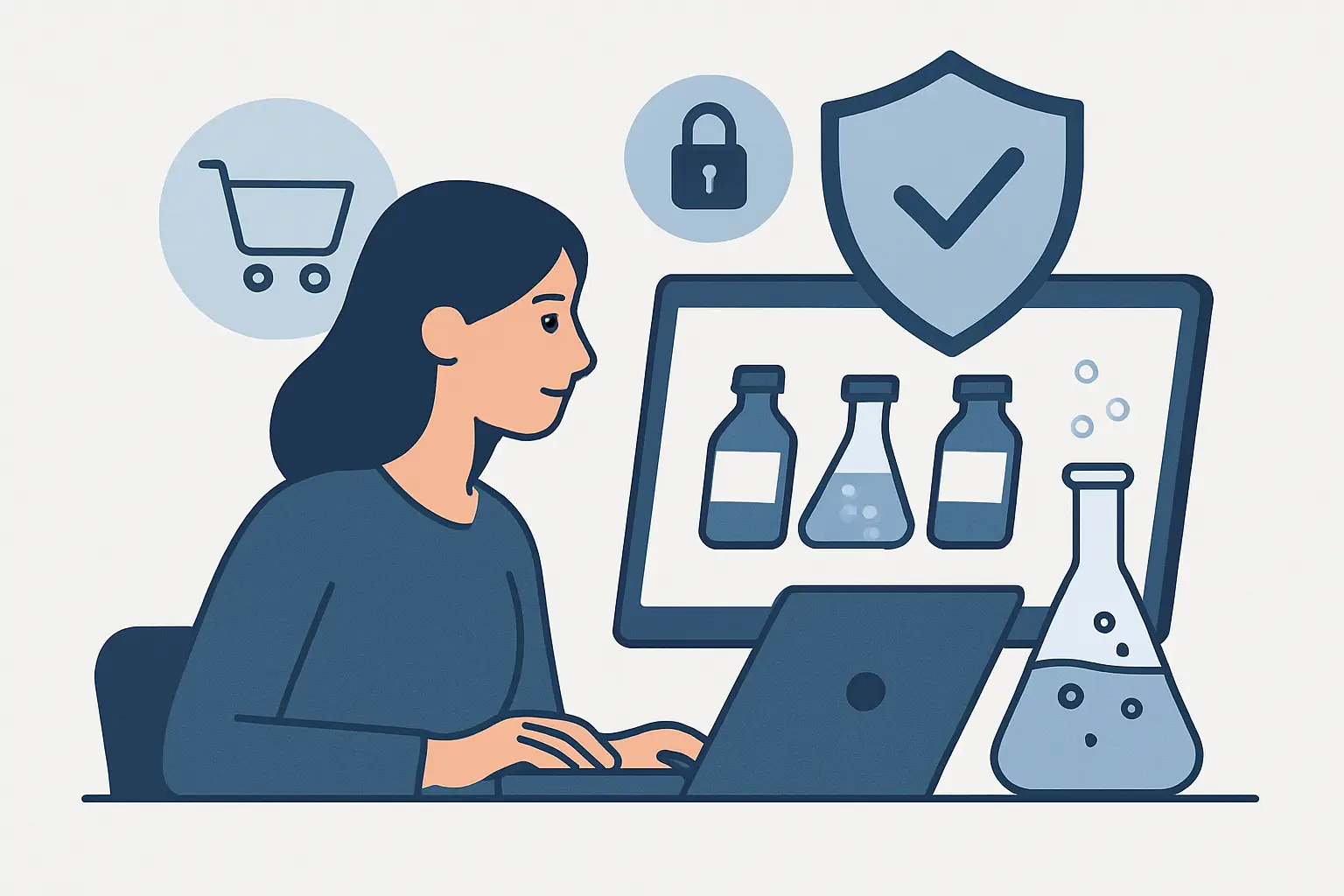
You can spot a first-time buyer from a mile away: they are not asking about effects – they are asking if the package lands, if the product is real, and if they are about to get burned.
That is the only question that matters at the start: is it safe to buy research chemicals online? The honest answer is “it depends.” There is real risk in this market, and the people who pretend otherwise are usually the reason the risk exists.
This is a practical guide to lowering the chances of bad outcomes – fake product, sloppy shipping, compromised privacy, or a vendor that disappears the moment your payment clears. No fairy tales. Just what actually moves the needle.
Is it safe to buy research chemicals online?
“Safe” splits into three different lanes, and you need all three.
First is product safety – you receive what you believe you purchased, at a known concentration, without sketchy adulterants. Second is operational safety – your order is processed correctly, packaged discreetly, and shipped in a way that does not scream what it is. Third is personal and legal risk – your privacy, your data footprint, and the reality that laws and enforcement vary by location and compound.
Online purchasing can be safer than random local sources because you can evaluate a vendor’s process, consistency, and track record. It can also be much worse because scammers scale fast, and a clean-looking website is cheap. The “safe” play is not blind trust – it is verifying signals before you send money.
The real risks people underestimate
Most buyers obsess over one fear and ignore the boring stuff that causes most problems.
Counterfeit or misrepresented compounds are the big one. A listing title means nothing if the supply chain is weak or the seller is relabeling whatever they can move that week. Even when the compound is “right,” potency can swing if batches are inconsistent, storage is sloppy, or solvents and fillers are handled carelessly.
Shipping failures are the next reality. Late packs happen. Lost packs happen. Seizures happen. The difference between a professional operation and chaos is how they package, how they label, how they manage addresses, and whether they have tight internal fulfillment. A vendor that cannot ship cleanly cannot be trusted with anything else.
Then there is privacy. If a site wants your full identity, stores your data forever, or processes payments through channels that create an easy paper trail, you are taking on avoidable exposure. You do not need paranoia. You need basic operational discipline.
Finally, the “support vacuum” problem: you pay, you wait, you ask for an update, and you get silence. In this category, silence is the loudest red flag.
Vendor vetting: how to separate pros from pretenders
A serious vendor behaves like a logistics business and a lab supply business at the same time. The storefront is the least important part.
Start with testing language – not just “lab-tested” slapped on a banner. Look for specifics: batch identifiers, consistent naming, a clear stance on verification, and an overall tone that suggests repeatable process instead of hype. If every product description reads like a nightclub flyer and nothing reads like a controlled operation, that is a signal.
Next, evaluate consistency cues. Does the vendor stock the same core items in stable formats, or is it a rotating carnival of whatever they found this week? A tight catalog with clear formats (blotters, sprays, powders/crystals) usually points to repeatable sourcing and packaging workflows.
Then check operational promises. Same-day processing cutoffs, discreet shipping as a stated feature, and support availability are not just nice-to-haves – they are markers of an organization that expects to handle volume without melting down.
And pay attention to how they handle community. In this market, restock alerts, drop announcements, and real-time support channels are not “marketing fluff.” They are pressure valves. When something changes – inventory, shipping delays, new batches – a vendor with a live channel can communicate fast. A vendor with no channel and no responsiveness will leave you guessing.
If you want a clean example of the “process-first” style, Official Chemistry King positions itself around verification language, discreet shipping, and fast processing – the exact operational signals you should be looking for anywhere you buy.
How to read “lab-tested” without getting played
Here is the straight talk: testing claims are only useful if they connect to accountability.
A vendor can say “tested” and still sell inconsistent product if they are not controlling batch intake, storage, and packaging. What you want is a culture of consistency. That shows up when a shop treats batches like batches, not like mystery bags.
If a vendor provides lab results, you still want to ask basic questions mentally: Is the result tied to a batch? Is it current? Does the vendor talk about purity and identity in a way that suggests they know the difference? If none of that is visible, you are relying on faith.
Testing is not a magic shield. It is one layer. The rest is logistics discipline and honest labeling.
Payment safety: why crypto-only can be a feature, not a gimmick
People hear “crypto-only” and assume it is automatically sketchy. That is lazy thinking.
In practice, card processing creates a huge data trail and a permanent point of failure. Crypto payments, used correctly, can reduce exposure and keep checkout simple. The trade-off is finality: if you send funds to the wrong address, or you get phished, there is no chargeback saving you.
So payment safety becomes buyer behavior. Triple-check wallet addresses. Do not trust random DMs. Use the vendor’s official checkout flow. If a “support rep” pressures you to pay a different address than what the site generates, walk.
A professional vendor also makes onboarding easier for first-timers – clear steps, clear confirmations, and a system that acknowledges payment quickly so you are not sitting in the dark.
Shipping and discretion: what “professional” looks like
Discreet shipping is not just plain packaging. It is the whole chain.
A tight operation gets the boring stuff right: address formatting, label printing, internal handoffs, and packaging that does not leak smell, powder, or obvious shapes. They do not over-communicate details that create risk, but they do communicate enough to keep you informed.
Same-day processing promises matter because they are measurable. A cutoff like “payments received before 3pm ship same day” is a real commitment. It forces the vendor to run a clockwork fulfillment workflow. Vendors who cannot state a cutoff usually do not have one.
Also watch how a shop handles issues. Delays happen in the real world. A vendor that explains what is happening and responds quickly is safer than a vendor that pretends delays never occur.
Red flags that should end the conversation
Some warning signs are instant exits.
If pricing is unbelievably low across the board, assume you are the product. If the site has constant “limited time” panic with no operational detail, that is theater. If they refuse to discuss testing at all, or they hide behind vague phrases and get hostile when asked simple questions, that is not confidence – that is cover.
If support is only available through random accounts with no verification, you are one impersonator away from losing funds. And if a vendor cannot keep basic communication going after payment, do not reward that behavior with repeat orders.
“Safe” also means knowing your role and your limits
Research chemical buyers love control. That is the whole point – access, autonomy, precision. But control starts with your own decisions.
Do not buy anything you have not researched from multiple angles, including dose ranges, onset timing, interactions, and duration. Do not treat new batches or new formats like they are interchangeable. A spray is not the same as a powder. A blotter is not the same as a solution. Even when the compound name matches, delivery changes outcomes.
If you are mixing categories – stimulants with dissociatives, psychedelics with anything that raises heart rate – you are stacking variables. That is how “normal night” turns into a bad scene.
And yes, laws matter. “Not for human consumption” language is not a legal force field. You are responsible for understanding your local risk.
A buyer’s checklist that actually works
You do not need a 40-step protocol. You need a few strong filters.
Look for a vendor with repeatable operations: consistent catalog, clear formats, and realistic promises about processing and shipping. Favor privacy-respecting checkout and avoid shops that collect unnecessary personal data. Demand responsiveness – not necessarily 24/7 conversation, but clear, timely updates when it counts.
Then start small if you are testing a new vendor. Build confidence through successful deliveries and consistent product before you move into bulk.
The bottom line: safety is earned, not claimed
Buying research chemicals online can be done with fewer surprises, but only if you treat it like risk management, not shopping therapy. The safest buyers are not the boldest. They are the most disciplined.
If you want one closing thought to keep: choose vendors the way you choose compounds – based on consistency, verification, and predictable performance. That mindset will save you more money, more stress, and more headaches than any “deal of the week” ever will.